




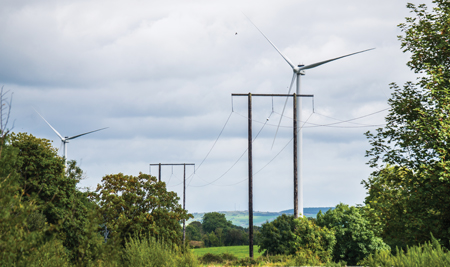
Where There’s Wind, There’s Often a Surplus of Transmission Capacity
In 2023, Minnesota-based power collective Great River Energy completed a two-year study designed to identify the sources of congestion with the highest financial impact on its operations. It not only wanted to decrease costs, it wanted to figure out how to unlock untapped capacity on the congested lines.
By Jørgen Festervoll, CEO, Heimdall Power, Norway
After pinpointing one of its key lines as the most critical to address, the line was promptly designated the first site for piloting Heimdall Power’s Neuron sensors (also known in the industry as ‘magic balls’). For the first time ever, Great River Energy would be able to assess hyperlocal line capacity, dynamically, to understand the sources and times of congestion. Through the Neurons, it was able to measure and analyse real-time factors such as current and line angles as well as temperature and weather conditions with data from Meteomatics. Great River Energy was particularly interested in determining the specific hours of the day when the congestion was highest.