





 Designing for the Rough as well as the Smooth
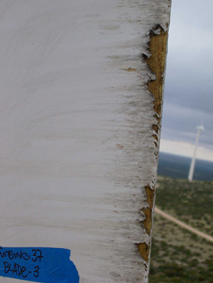
Optimal performance of wind turbine blades is critical to ensuring cost-effective power delivery. Aerodynamic behaviour plays a major role in overall efficiency, giving rise to highly refined blade section shapes designed to maximise energy capture. However, with increased performance comes increased sensitivity to changes in operating conditions. This article discusses studies of increasing surface roughness of turbine rotor blades over time and how the effects of the roughness can be modelled
By Chris Langel, Raymond Chow and C.P. van Dam, Department of Mechanical and Aerospace Engineering, University of California, Davis, USA