




 Offshore Wind Turbines to Provide Combined Electricity and Deep-Sea Thermal Energy
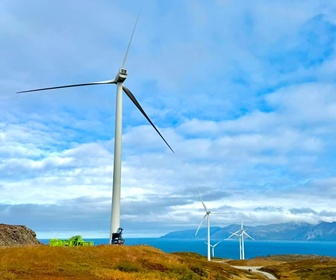
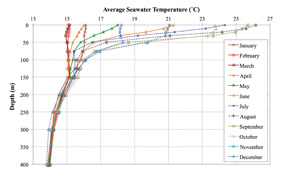
Research at the University of Malta is evaluating the possibility of using offshore wind turbines in deep waters to exploit wind energy at the same time as making use of the enormous renewable thermal energy resources available in deep-sea cold water. The concept is based on the direct coupling of offshore wind turbines to positive displacement pumps, replacing the gearbox and electrical generator found in conventional systems. Rather than producing electricity directly, individual wind turbines would pump pressurised deep sea water to a centralised hydroelectric power station. After producing electricity, the sea water is pumped through a heat exchanger to provide district cooling. The idea of using cold water below the thermocline layer and offshore wind energy to extract it has evolved into the Offshore Wind and Thermocline Energy Production (OWTEP) system.
By Mr Daniel Buhagiar and Prof. Ing. Tonio Sant, Department of Mechanical Engineering, University of Malta
Despite the numerous advantages of offshore wind, it represents less than 2% of the world’s total installed wind power. This can be attributed to a number of technical issues that stem from the use of conventional onshore designs in the offshore environment. There is now a strong drive to develop offshore-specific turbine designs. The OWTEP system presents a radical approach to offshore wind turbine engineering; it is better suited for the offshore environment, without nacelle-based gearboxes or generators. The concept offers opportunities to improve the viability of the turbine by maximising the use of the infrastructure and concurrently harvesting the different resources available at deep water installation sites.