




Preliminary Measurements and Research Agenda
As part of an ongoing research project, we conducted preliminary infrasound measurements at several Swedish wind farms. The objective was to evaluate variations in the infrasound signal between wind turbine operational and shutdown modes and to identify differences between infrasound levels measured near wind farms and at reference locations unaffected by wind turbine emissions. This article summarises early observations, outlines the analytical approach, and presents a research agenda for future work.
By Per Ängskog, Kourosh Tatar and José Chilo, University of Gävle, Sweden
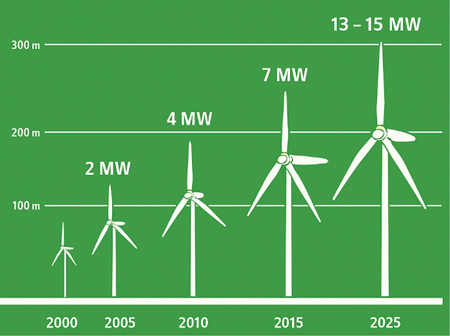
The context for this research is the ongoing energy transition and the trend towards repowering with increasingly tall turbines, with total heights approaching 300 metres under discussion. These developments raise new questions regarding infrasound propagation, nocturnal enhancement under stable atmospheric conditions, and the nature of exposure experienced in and around dwellings.
Measurement Campaign and Early Observations
Infrasound measurements were obtained at two sites – one adjacent to the wind farm and one at a distant control location. Analysis revealed consistent differences in infrasound levels between operational and shutdown conditions, as well as between the wind farm site and the control location. Under stable atmospheric stratification, pronounced temporal patterns attributable to turbine operation were evident. These observations provide a baseline for understanding how future changes in turbine design and scale, such as those expected in repowering projects, may influence acoustic behaviour.
Repowering and Effects
Repowering with higher hub heights and larger rotors can shift both the spectral emphasis and propagation patterns of infrasound. Increased rotor diameters may enhance low-frequency content, while elevated hub heights can interact differently with atmospheric layers – particularly under stable stratification or inversion conditions – leading to extended propagation distances. Such changes may alter both the magnitude and temporal variability of infrasound at receiver locations. These factors underscore the importance of long-term, multi-seasonal monitoring programmes that explicitly link turbine operational states, detailed atmospheric profiling, and receiver environments (both outdoor and indoor) to capture the full range of variability and inform predictive modelling.
Research Priorities
Building on these preliminary observations and the anticipated trend towards repowering with turbines approaching total heights of up to 300 metres, we identify the following research priorities:
Repowering impacts – How does the transition to significantly taller turbines influence the characteristics and variability of infrasound emissions from wind farms?
Scaling and atmospheric effects – How frequently do larger rotor diameters, in combination with stable atmospheric stratification, result in measurable enhancement of infrasound levels at various distances?
Source contribution – Which operational states of the new, taller turbines produce a distinct infrasound signature above background levels, and how consistent is this signature over time?
Indoor transmission – How does the building envelope, including façade insulation and room acoustics, modify infrasound propagation indoors, and how might these transformations affect human perception?
Measurement standards – Which measurement protocols, quality assurance procedures, and reporting criteria can ensure comparability of results across sites, turbine models, and seasons?
Mitigation and operational control – How do rotor blade design, aerodynamic modifications, and operational strategies influence on-site infrasound emissions, and what measures are most effective for targeted mitigation?
Conclusions and Implications
The findings provide a basis for developing adaptive permit conditions, including weather-dependent operational limits, and for establishing systematic follow-up requirements in repowering projects. Furthermore, the adoption of standardised measurement protocols, harmonised reporting formats, and the provision of open, quality-controlled datasets would enhance transparency and facilitate constructive dialogue among authorities, industry stakeholders, and local communities. Such measures would not only enable a more consistent evaluation of mitigation strategies but also support evidence-based planning and policy decisions in the context of an evolving wind energy landscape.
Further Reading
- IEC 61400-11. Wind turbines – Part 11: Acoustic noise measurement techniques.
- World Health Organization. 2018. Environmental Noise Guidelines for the European Region.
- Møller, H. and Pedersen, C.S. 2011. Low-frequency noise from large wind turbines. JASA 129(6), 3727–3744.
- Salt, A.N. and Hullar, T.E. 2010. Responses of the ear to low frequency sounds, infrasound and wind turbines. Hearing Research 268(1–2), 12–21.
- Health Effects Related to Wind Turbine Sound: An Update by Irene van Kamp and Frits van den Berg. National Institute for Public Health and the Environment, 3721 MA Bilthoven, The Netherlands; Mundonovo Sound Research, 9953 PH Baflo, The Netherlands
Biographies of the Authors
Per Ängskog is a researcher in applied and field measurements with a focus on instrumentation and data quality management in complex outdoor environments.
Kourosh Tatar is a researcher in signal processing and instrumentation, developing time–frequency and coherence methods for environmental acoustics.
José Chilo is a senior lecturer at the University of Gävle. His research includes signal processing and field measurements of low-frequency sound.