



- Details
- Category: Windtech Markets
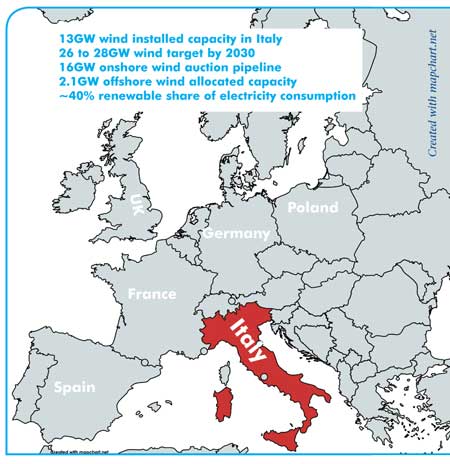 Italy’s wind energy sector is undergoing a period of expansion and structural adjustment as the country seeks to reduce dependence on imported fossil fuels and accelerate renewable deployment. While installed capacity continues to increase, growth remains shaped by permitting delays, grid constraints, infrastructure limitations and evolving investment conditions. According to Davide Astiaso Garcia, Italy has around 13GW of installed wind capacity and more than 40GW of solar. Renewables account for roughly 40% of electricity consumption, although natural gas continues to dominate the wider energy system.
By Davide Astiaso Garcia, Secretary General, ANEV, Italy
- Details
- Category: Windtech Markets
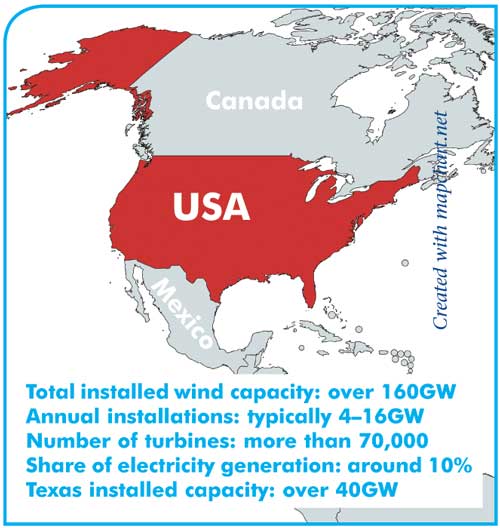 The wind energy sector in the USA combines a substantial installed capacity base with increasing political and regulatory uncertainty. As an early adopter of modern wind technology, the country has developed a strong domestic market that remains among the largest globally. However, its growth trajectory is now shaped by policy shifts, regional disparities, and a growing reliance on non-federal drivers.
- Details
- Category: Windtech Markets
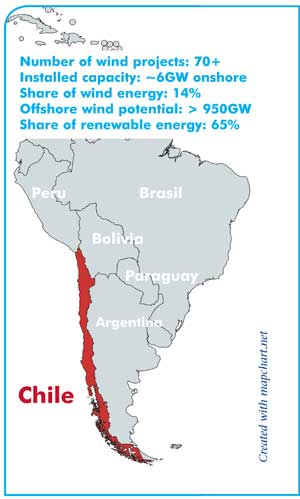 Chile’s wind sector has moved from rapid expansion to a stage where system integration is becoming the central challenge. According to Felipe Gallardo, Research Director at the Chilean Association of Renewable Energy and Storage (ACERA), the country’s progress in building wind capacity is now being matched by the need to adapt infrastructure, regulation and market design to support a highly renewable electricity system.
By Felipe Gallardo, Research Director, Chilean Association of Renewable Energy and Storage
- Details
- Category: Windtech Markets
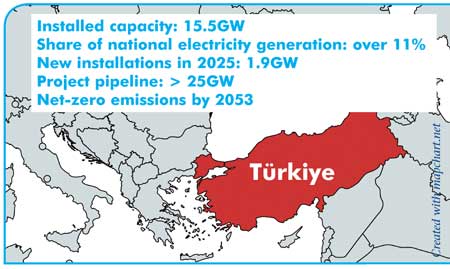 Türkiye has developed one of the most active wind energy markets in the Mediterranean region, combining strong onshore resources with a growing manufacturing base and a broad project pipeline. Wind power now plays a central role in the country’s strategy to strengthen security of supply, reduce import dependency, and reach net-zero emissions by 2053.
By Ibrahim Erden, President of the Turkish Wind Energy Association (TÜREB)
- Details
- Category: Windtech Markets
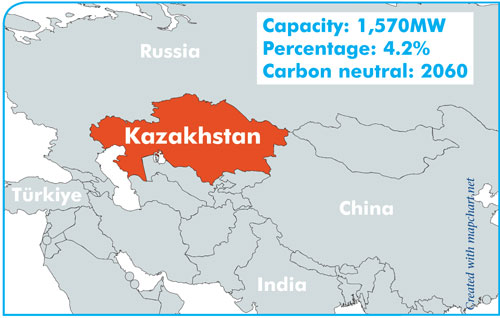
Kazakhstan, long recognised for its mineral and fossil fuel wealth, is increasingly turning to renewable energy as part of its green transition. The country has ratified the Paris Agreement and committed to reducing carbon dioxide and other harmful gas emissions by 15% by 2030, a target that could rise to 25% with support from international financial institutions. President Tokayev has set a long-term goal of carbon neutrality by 2060.
By Arman Kashinbekov, CEO, Association of Renewable Energy, Kazakhstan