





Active Flap Systems Coming Closer to Market
The idea of active flap systems on wind turbine blades is to reduce the variable loading on the blades by continuously adjusting the shape of the trailing edge of the blade to counteract the fluctuating loads from the wind. The reduction in loading means that a larger rotor can be mounted on the same turbine platform and the power production can be increased. In this way the cost of energy (COE) can be reduced, which is the overall goal with the new smart blade control.
By Helge Aagaard Madsen, Research Specialist, DTU Wind Energy, Denmark
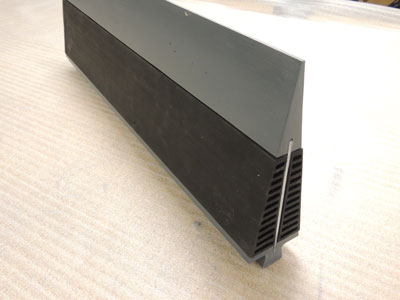 Considerable research on active flap systems, or morphing trailing edges of wind turbine blades, has been ongoing for almost 15 years at many wind energy research institutes such as Delft University (the Netherlands), Sandia Laboratories (USA) and DTU (Denmark). At present the different systems are being studied intensively by many European Research Institutes and universities within two ongoing EU funded projects InnWind and AVATAR. The numerical studies show, in general, very promising potentials for load reduction, reaching 40–50% for the different flap systems with the fastest response and with flaps covering a major part of the blade span. The active flap systems will work in parallel with the pitch system, which is the existing method for controlling the loads on the blades. In contrast to the pitch system, which gives the same control action along the whole blade, the flap system is a distributed control system.. It means that different control actions can take place along the blade and this becomes more and more important as the blade size increases. For example, for a 70-metre blade the influence of a gust can be quite different from the tip part to the middle part of the blade. Numerical studies show that pitch and flap systems can work efficiently in parallel giving higher load alleviation than, for example, a cyclic pitch system, and, at the same time, reduce the pitch activity considerably. As pitch bearing wear can be a major challenge for cyclic pitch applications the reduction in pitch activity is an attractive goal.