



 Wind power development across Europe
Wind power development across Europe continues to be influenced by changes to permitting, grid access, auction systems, and investment conditions. Recent developments in Azerbaijan, Hungary, Norway, Germany, Denmark and Türkiye’s plans for offshore wind show how different countries are addressing the challenges of expanding renewable electricity generation. Azerbaijan has designated a 711.4-square-kilometre area in its sector of the Caspian Sea for the construction of offshore wind farms. Under the Cabinet of Ministers decision, the Ministry of Energy is responsible for selecting an electricity producer for the designated area. Once the decision enters into force, construction permits will be issued under Azerbaijan’s Urban Planning and Construction Code and renewable energy legislation.
In Hungary, the focus is on making available grid capacity accessible to new wind projects. The Hungarian Energy and Public Utility Regulatory Authority has launched a tender for grid connection rights, with applications opening on 1 September 2026. Applicants must request at least 15MVA of export capacity and propose a wind power plant with a minimum installed capacity of 15MW. Battery energy storage systems can be included as a secondary technology. The procedure is intended to support renewable energy development while maintaining the security of supply and providing transparent allocation of available network capacity. Successful applicants must complete and commission their projects within 24 months of the approved connection date.
Norway is seeking to reduce the time required to develop new power generation and electricity grid infrastructure. The government aims to halve the time required to develop the national and regional electricity grid compared with the situation before 2021. It says planning and construction of the largest transmission projects can currently take up to 14 years. Onshore wind is identified as a technology that can provide large amounts of new electricity quickly and at low cost. The government plans to remove the requirement for a municipal zoning plan for onshore wind projects while retaining municipalities’ right to approve or reject projects. It also proposes that municipalities receive revenues from wind power from the start of construction.
Germany is reviewing its framework for offshore wind. The Federal Ministry for Economic Affairs and Energy has opened consultation on a draft amendment to the Wind Energy at Sea Act. The draft retains the target of at least 70GW of offshore wind capacity by 2045 and proposes annual tenders of between 2,000 and 4,800MW, two-sided contracts for difference, and an increase in the standard operating period for new offshore wind farms from 25 to 35 years.
Denmark has completed an offshore wind auction covering two sites with a combined capacity of 1.8GW. Vattenfall was awarded both projects, with bids of € 67.42/MWh for Nordsøen Midt and € 72.50/MWh for Hesselø. Both projects will receive capability-based contracts for difference for 20 years.
Türkiye is preparing its first major offshore wind tender under the Renewable Energy Resource Areas programme. Four candidate zones have been identified, and a draft specification has been released for a 1GW tender. Offshore wind capacity is expected to enter Türkiye’s power mix from 2032, with around 1.3GW forecast to be operational by 2035. Permitting, grid connections, supply chain disruption, and financial risks are among the factors that could affect development.
While the approaches differ from country to country, the developments outlined here show that the expansion of wind power depends on more than project development alone. Grid infrastructure, permitting procedures, auction design, and the conditions offered to investors all play a role. It will be interesting to see how these measures develop and whether they can provide the conditions needed for further wind power deployment. WindEnergy Hamburg is taking place from 22 to 25 September, and I would be happy to discuss current market developments with you in person there.
Enjoy reading and I hope to see many of you in Hamburg!
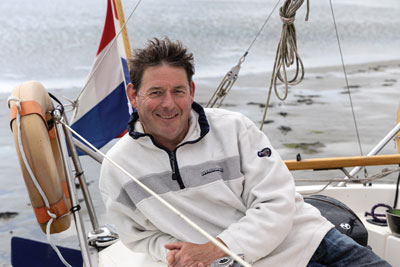
Floris Siteur
Publisher/Editor-in-Chief