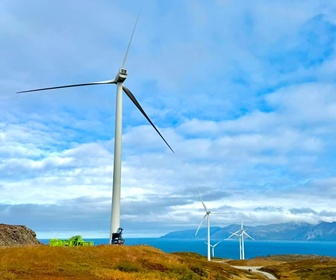





Wind power remained a leading renewable source of electricity in the USA in 2025, according to data from the U.S. Energy Information Administration analysed by the Sun Day Campaign. During the first eleven months of the year, wind turbines generated 10.1% of total electricity, an increase of 1.2% compared with the same period in 2024. In November alone, wind generation was 2.0% higher than a year earlier.
Combined wind and solar generation accounted for 19.0% of total electricity output between January and November 2025, up from 17.3% in the same period of 2024. Together, wind and solar produced 16.9% more electricity than coal and 10.1% more than nuclear power during this period.
Wind capacity also continued to expand. Between 1 January and 30 November 2025, wind capacity increased by 4,234.2 MW. Planned additions over the following twelve months total 9,256.2 MW onshore and 1,515.0 MW offshore.
Solar power showed the fastest growth among major electricity sources. In November 2025, utility-scale solar generation increased by 33.9% compared with November 2024, while small-scale solar rose by 11.0%. Combined solar output accounted for 7.2% of national electricity generation during the month. Over the first eleven months of 2025, total solar generation increased by 28.1%, providing just under 9.0% of total electricity.
Battery storage capacity also expanded rapidly, increasing by 49.4% in 2025 with 13,357.0 MW added. Planned battery additions for the following twelve months amount to 21,502.2 MW.
The combined output of all renewable sources, including wind, solar, hydropower, biomass and geothermal, reached 25.7% of total electricity generation in the first eleven months of 2025, up from 24.3% a year earlier. Renewables ranked second only to natural gas, whose electricity output declined by 3.7% over the same period.
The Energy Information Administration forecasts that nearly all net new generating capacity in 2026 will come from renewables and battery storage. Utility-scale renewables and battery storage are projected to increase by 69,579.1 MW over the next twelve months, with additional growth expected from small-scale solar. Fossil fuel and nuclear capacity are expected to show limited or negative net growth.
If these projections are realised, renewables and battery storage would account for more than 99% of net new capacity in 2026.