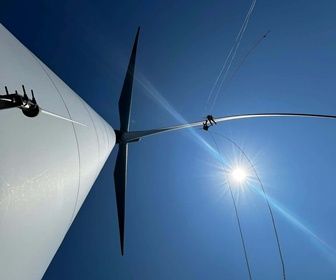





Wind energy continued to support Europe’s industrial base and energy security in 2025, with 19.1 GW of new wind capacity installed during the year. Total installed wind capacity across Europe reached 304 GW, according to the Annual Statistics Report published by WindEurope.
Investment activity also remained strong, with €45 billion committed to new wind energy projects to be delivered in the coming years. However, discussions around reform of the European Union electricity market design and potential changes to the European Union Emissions Trading System are creating uncertainty for the sector.
Onshore wind accounted for 90% of new installations in 2025, with more than 17 GW added, marking a record year for onshore deployment. Of this, 2 GW came from repowering projects. Installations were relatively broad-based, with nine countries each adding more than 500 MW.
Germany led new additions with 5.2 GW, followed by Türkiye with 2.1 GW, Sweden with 1.8 GW and Spain with 1.6 GW. Lithuania installed 759 MW, increasing its total wind capacity by more than 40%. Wind energy covered 33% of Lithuania’s electricity demand in 2025.
Europe connected 2 GW of new offshore wind capacity to the grid in 2025, the lowest annual figure since 2016, partly due to construction delays. Only three countries commissioned new offshore wind turbines: the United Kingdom, Germany and France. A higher level of offshore grid connections is expected in 2026 as delayed projects are completed.
Europe is projected to install 151 GW of new wind capacity between 2026 and 2030, including 112 GW within the European Union. Germany is expected to account for more than one third of planned European Union onshore additions.
Despite this pipeline, several structural challenges remain:
- Grids: Limited grid expansion and long connection queues continue to constrain deployment. Member States are under pressure to implement measures set out in the European Union Grids Package.
- Electrification: Slow progress in electrifying industry, transport and heating is weakening demand growth for renewable electricity. The forthcoming European Union Electrification Action Plan is expected to address barriers, including support for low- and medium-temperature industrial heat applications using technologies such as heat pumps and electric boilers. Reducing non-energy taxes and levies on electricity is also seen as important to support investment.
- Permitting: While the Renewable Energy Directive includes measures to speed up permitting, implementation at national level remains uneven. The European Commission has initiated infringement procedures against 26 of 27 European Union Member States for failing to apply the updated rules.