



 The Fore-Pair consortium has begun work on autonomous robotic technologies for inspecting, maintaining, and cleaning floating offshore platforms, including floating wind and floating solar systems. The project has received about €10 million in federal funding from the German government.
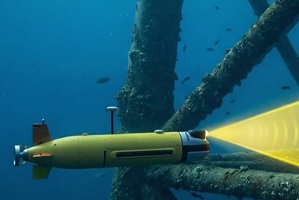
The initiative focuses on technologies that can improve how floating platforms are assessed and maintained. This includes autonomous underwater vehicles designed to examine supporting structures at depth and in challenging conditions, such as strong currents or low visibility. High-resolution three-dimensional sensing and digital twins will be used to record platform conditions in real time, identify changes, and support data-driven maintenance planning. The project will also investigate protective measures to limit fouling and extend asset lifetimes. Tools using augmented and virtual reality will allow maintenance teams to simulate tasks within the digital twin, test procedures, and prepare inspection scenarios.
The partners in the Fore-Pair consortium are the Federal Institute for Materials Research and Testing, the Fraunhofer Institute for Manufacturing Technology and Advanced Materials, and Rosenxt.
The project runs until 2029 and is funded by the Federal Ministry for Economic Affairs and Energy under the Maritime Research Programme, supported by Project Management Jülich.
Fore-Pair, Germany, offshorewind, robotics, Fraunhofer, Rosenxt