



 X1 Wind has received a Statement of Compliance for the basic design of its X100 floating wind platform from DNV. The assessment was carried out in accordance with the DNV-SE-0442 standard for the certification of floating wind turbines. The statement confirms that the X100 platform meets relevant international safety, engineering and technical requirements.
The review covers structural design, stability and hydrodynamic behaviour, including performance under extreme environmental conditions such as waves, wind and currents with a 500-year return period. DNV also verified the calculation methods applied by X1 Wind and assessed the design of the platform, including the station-keeping system, weathervaning structure and turbine integration for an intended service life of 25 years.
The approval supports the certification pathway for larger commercial platforms. X1 Wind is developing the scaled-up X150 version, designed for turbines in the 15–20 MW range for projects in Europe and Asia, using the same calculation methodologies validated during the X100 certification process.
The X100 platform is scheduled for deployment at the PLEMCAT test site in the Mediterranean Sea off Spain as part of the NextFloat project. The initiative is led by Technip Energies and X1 Wind and aims to advance the industrialisation of floating wind technology and reduce the levelised cost of energy. The project receives support from private investment as well as several public programmes, including the EU-funded NextFloat and NextFloat+ projects, the PAREF programme supported by the French State under France 2030 and operated by ADEME, and the Spanish RenMarinas programme.
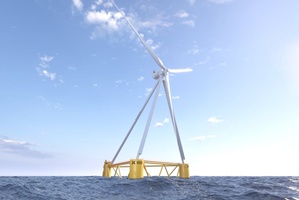
The X100 platform is designed for turbines with a rotor diameter of around 160 metres, a hub height of 100 metres and power ratings between 6 MW and 10 MW depending on site conditions. The pilot installation is expected to operate offshore for several years to gather operational data required for final prototype certification and future commercial deployment.
X1 Wind’s design combines elements of a tension-leg platform with semi-submersible structures. The company states that the concept allows a primary steel platform weight of around 1,500 tonnes, which could represent a reduction of 30% to 50% compared with steel floating platforms used in comparable European pre-commercial projects.
Image courtesy X1 Wind