



 Inch Cape has completed its 18-month offshore survey and boulder relocation programme, with a total of 26,402 boulders moved to enable construction activities. The boulders were relocated along the 85 km export cable corridor, at the offshore substation platform, around each foundation location and along 150 km of array cable routes. They were moved within the project’s consented boundaries, between three and 150 metres from their original positions.
The work supports offshore construction activities including cable installation and burial, foundation installation and wind turbine installation using the jack-up vessel Wind Mover.
Boulder relocation was carried out in several campaigns as part of the engineering, procurement, construction and installation array cable contract awarded to TKF. Operations were conducted on a continuous basis onboard vessels operated by N-Sea, including FS Aries, 4-Winds and Pathfinder. Initial geophysical surveys were undertaken by the survey and support vessel Geo Ranger to identify seabed features.
The boulders originate from glacial activity in the Firth of Forth during the last glacial period, around 11,500 years ago, and ranged in size from 30 centimetres to 2.5 metres in diameter.
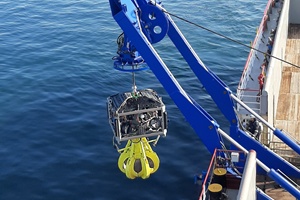
Relocation was performed using remotely operated vehicles and auxiliary remotely operated vehicles equipped with boulder grabs. These systems are designed for subsea operations and can also be fitted with excavation and cutting tools. Operations were monitored from onboard control rooms on each vessel.
The work was carried out under marine licences granted by the Marine Directorate, and coordinates of relocated boulders have been shared with the Scottish Fishermen’s Federation for distribution within the fishing industry.
While some additional relocations may be required during installation, the planned campaigns are now complete. Inch Cape is a joint venture between ESB and Red Rock Renewables.